In Defense of Comedy: The Joke’s on You

“He who loves men, loves their joy…everything which is true and beautiful is full of all-forgiveness.”

Fyodor Dostoevsky, The Brothers Karamazov

After getting ‘cancelled’ in 2019 for using racial slurs on a podcast, the American stand-up comedian, Shane Gillis, released his first comedy special in 2021, Shane Gillis: Live in Austin on Youtube. As of today, his special garnered more than 10 million views.

In his special, Gillis tells a story about tricking his heroin-addicted sister to come home for a family intervention. The plan involved telling her that they had just won tickets to Six Flags, a popular amusement park, to get her to come home.

“The plan was: pick my sister up from the bus stop. Not take her to Six Flags. Take her to a hotel where we’re going to have an intervention… I didn’t want to start the intervention with a lack of trust…So I took her to Six Flags.”

What followed was a description of Gillis seeing his own sister nodding off while waiting to go down the waterslide, and seeing her waking up mid-air before landing in the water. Of course, the crowd roared with laughter as the comedian depicted the hilarious scene which in another context would take on crushingly tragic dimensions.

“Tragedy is when I cut my finger. Comedy is when you fall into an open sewer and die.” — Mel Brooks

Comedy and tragedy can be seen as two sides of the same coin. Many people, comedians included, extract humour from tragedy, or unfortunate events. But not everybody agrees on what should be deemed to be funny, or what should be joked about. 

Because of the internet, and especially in recent years, comedy has seen an unprecedented boom. With the rise of podcasts and streaming platforms, many comedians have found new and independent ways to interact with their audience. 

The most popular podcast in America, The Joe Rogan Experience, is of course headed by none other than Joe Rogan, who is himself a comedian. With an audience of more than 11 million daily listeners, and with countless reposts of clips from interviews on Youtube and on social media, the actual reach of his podcast is difficult to measure.

Although audiences are now able to get a more personal glimpse at the process of comedians working on their craft, interacting with their peers, and discussing ideas and philosophies regarding comedy, many have taken issue with the content of some of those conversations. As a result, comedians, as well as their works, have come under serious scrutiny.

Calls for “cancellation” and threats of harm have become commonplace for comedians. In recent years, Dave Chappelle, one of the greatest living comedians, has caused significant controversy with his latest special, The Closer (2021). Chappelle’s discourse on the subject of transgender people has been judged by some to be transphobic. He was later attacked in 2022 by an armed assailant, while on stage performing at the Hollywood Bowl. 

In another famous example, Chris Rock was assaulted by Will Smith during his presentation for Best Documentary Feature at the 94th Academy Awards in March of that same year. The motive for the assault was a joke made by Rock, which Smith deemed as offensive. 

“My favourite comedians are like musicians. And the audience is their instrument, and the music they make is your laughter. And that’s the laughter that I’ve scored my entire life to.” — Dave Chappelle

Did Shane Gillis not realize the tragic nature of his sister’s addiction? It would be foolish to assume so. It is perhaps one of the greatest gifts of comedy to make people laugh about painful and difficult things in life. It is a vital part of the craft of comedy to find humour in subjects of discomfort, which for the comedian himself, and for the audience, may in turn become a source of relief and joy.  

Which of us should decide what should or shouldn’t be joked about? In the world of comedy, and in all forms of artistic expression, no subject should be off-limit. This is different from saying that certain jokes shouldn’t offend anyone, or that people don’t have a right to voice their displeasure. 

Perhaps comedy will always be in conflict with social consciousness, the awareness of social inequities and the desire to right the wrongs of the past. But we should also remember that the vehicle of oppression is not comedy, and that in this art the goal is not to offend but to make people laugh. 

In my own life, I have experienced first-hand the way in which humour can come to enliven an otherwise tragic event. In 2020, my father was diagnosed with an incurable auto-immune disease that caused him great pain. He could no longer walk unassisted. 

When I returned home, I witnessed a moment when my mother was helping my father go up a small flight of stairs. She held onto his arm, and together they went up the stairs silently, one step at a time. My father, who had been my protector for my whole life, was now frail and nearing death. And although I could have let them play out this tragic scene, I decided to make a joke. 

My father had always been sensitive about his age, so I told him that he looked really old. My father said “Thank you.” My mother, still holding onto his arm, turned towards me, trying to stifle her laughter, and together, for one precious moment, they began to laugh. 

“My God! A whole minute of bliss! Is that really so little for the whole of a man’s life?”

― Fyodor Dostoyevsky, White Nights
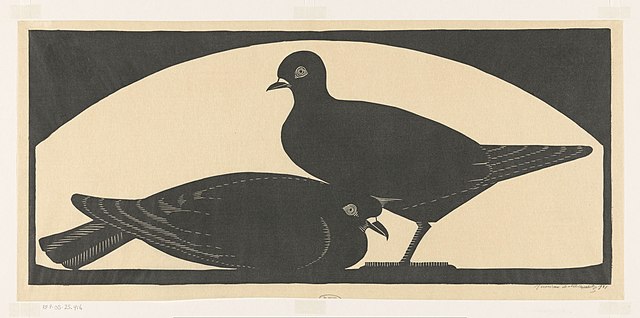
On Pigeons: A Reflection

“[…] between the comfortable perception of our humanity—of how we see ourselves—and total savagery, the last line of defense is the pigeons.”

First, we human beings needed to survive. It was in our nature to survive. And so, we built cities, isolating ourselves from nature—and doing so, invented philosophies about how we were separate from the realm of other animals. However, in our cities today, all across the world, nature intrudes on our daily lives. In this corner of the world which we carved out for ourselves, nature, most noticeably in animals, lurks everywhere. In our minds, with our tendency for hierarchization, not all animals are created equal. Much has already been said about the meaning and the symbol of the rat, but not as much about its avian equivalent, the so-called “flying rat,” otherwise known as the common pigeon.

They are known as pests. Poisons have been used for population control. Spikes are placed over the ledges of buildings to stop them from nesting. A similar method is used on the floors of nooks and recesses of certain buildings to stop homeless people, equally undesirable, from sleeping there. And yet, they remain, both pigeons and the homeless, as the ever-present constants of all the cities of the world. (Eliminating homelessness would be a beneficial thing indeed, a humanistic achievement—but to rid ourselves of pigeons?)

During World War II, during the siege of Leningrad, there were no pigeons. In the besieged city, where two million people died of starvation, people hunted pigeons—in part because of their abundance, and also because they were so tame. Having eradicated them—having already depleted all other animals—some people resorted to cannibalism. From this fact there are many conclusions one could come to, regarding our human nature. One could be this: that between the comfortable perception of our humanity—of how we see ourselves—and total savagery, the last line of defense is the pigeons.

 All manner of human beings, from all walks of life, have encountered these birds. From the sidewalks of busy intersections to the sprawling city parks where they nest, breed; scrounge for food, and fly about. On park benches, the loneliest people feed them and count on their company, finding comfort in them. 

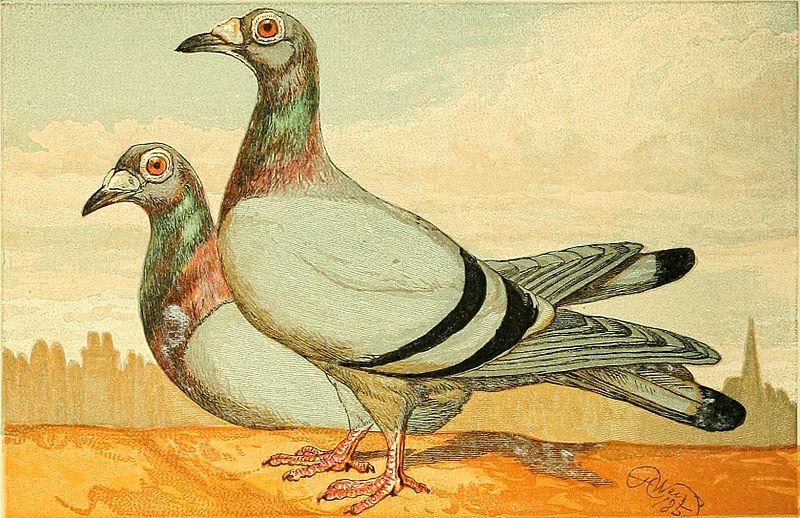
In my own life, I spent many hours watching them—sensing a connection from their dark eyes surrounded by an orange eye-ring; watching how they bobbed their heads to walk around; how they cooed and rubbed their beaks together in courting. One has only to look to see a beautiful bird, so tame that it would eat from your hand. Often I would look at them, and remember a story my mother told me about her childhood in Mexico, about having to raise them for food because she was so poor. And in those moments, I feel gratitude for these gentle birds with their iridescent wings—these creatures, capable of flight, that could easily fly away, but that choose to remain with us in our cities.

—GSO

On The Symbolism Of The Cicada: The Poet and the Song (Short #1)

Everything we perceive serves to construct the language with which we understand the world…

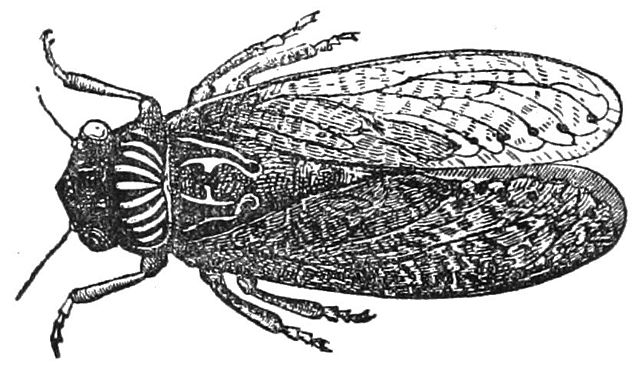
We exist in a world of symbols, as Aldous Huxley expressed in his essay, “The Doors of Perception.” Everything we perceive serves to construct the language with which we understand the world: a language built on associations and representations to build meaning. The cicada has existed longer than we, as human beings, have stood upright. The earliest fossils we have of the cicada are from the Jurassic period, and the oldest instances of their symbolism in cultural artifacts are from the Shang Dynasty, and from the time of Homer’s Iliad in the 12th century BCE. Often they are symbols of rejuvenation and immortality. Their distinctive song, heard in the summertimes, associates them with music, and as the personification of the poet, because it represents an insect that sings all its life until it dies. 

—GSO

Dreamcicadas: Introduction

An introduction aimed at summarizing the creative concept behind Dreamcicadas.

Hello! My name is Gabriel. I’m a writer and musician based in Toronto, Canada. I write about arts, music, literature, and about a variety of subjects and ideas.

I’ve been a student of the humanities (specifically: arts, music, and literature) for the past ten years now— first at the University of Ottawa (B.A. general), then at The Glenn Gould School of The Royal Conservatory of Music (PDP in voice), and finally at The University of Toronto (HBA English & Philosophy).

My goal is to share all the different aspects of art and culture that I’ve absorbed in my years of study and as a professional musician.

Why Dreamcicadas?

  1. The name Dreamcicadas comes from Borges’ seminal 20th century book El Hacedor (literally: The Maker), often titled as Dreamtigers in English.
  2. The fact that cicadas spend most of their lifetime underground—up to seventeen years in the case of the periodical cicadas—represented for me the long and unconscious prelude of artistic creation.
  3. Dreams represent the unconscious creative world, longing to be brought forth in the creative act— in this case, through writing.

It is my hope that this blog on arts & culture will culminate into a series of books and magazines.

Here are some general subjects to expect for future posts:

  • Literature (fiction, poetry, philosophy, psychology, comedy etc.)
  • Music (world music, western classical, popular music of all genres)
  • Symbolism (in all forms of art)
  • Shorts: Bios, Essays, Literary Sketches
  • Poetry in translation (my own translations)
  • Essays on ideas and artworks
  • Short stories and poems (my own works)

Please follow my IG page for daily posts and updates: @dreamcicadas