On Pigeons: A Reflection

“[…] between the comfortable perception of our humanity—of how we see ourselves—and total savagery, the last line of defense is the pigeons.”

First, we human beings needed to survive. It was in our nature to survive. And so, we built cities, isolating ourselves from nature—and doing so, invented philosophies about how we were separate from the realm of other animals. However, in our cities today, all across the world, nature intrudes on our daily lives. In this corner of the world which we carved out for ourselves, nature, most noticeably in animals, lurks everywhere. In our minds, with our tendency for hierarchization, not all animals are created equal. Much has already been said about the meaning and the symbol of the rat, but not as much about its avian equivalent, the so-called “flying rat,” otherwise known as the common pigeon.

They are known as pests. Poisons have been used for population control. Spikes are placed over the ledges of buildings to stop them from nesting. A similar method is used on the floors of nooks and recesses of certain buildings to stop homeless people, equally undesirable, from sleeping there. And yet, they remain, both pigeons and the homeless, as the ever-present constants of all the cities of the world. (Eliminating homelessness would be a beneficial thing indeed, a humanistic achievement—but to rid ourselves of pigeons?)

During World War II, during the siege of Leningrad, there were no pigeons. In the besieged city, where two million people died of starvation, people hunted pigeons—in part because of their abundance, and also because they were so tame. Having eradicated them—having already depleted all other animals—some people resorted to cannibalism. From this fact there are many conclusions one could come to, regarding our human nature. One could be this: that between the comfortable perception of our humanity—of how we see ourselves—and total savagery, the last line of defense is the pigeons.

 All manner of human beings, from all walks of life, have encountered these birds. From the sidewalks of busy intersections to the sprawling city parks where they nest, breed; scrounge for food, and fly about. On park benches, the loneliest people feed them and count on their company, finding comfort in them. 

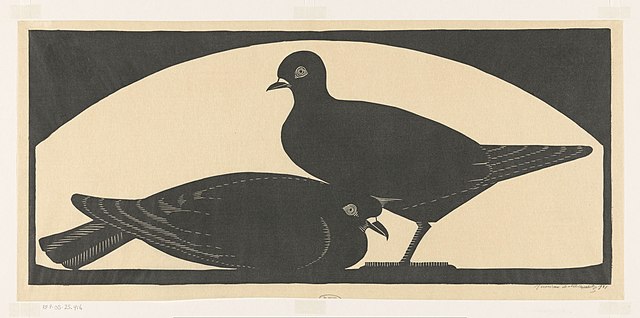
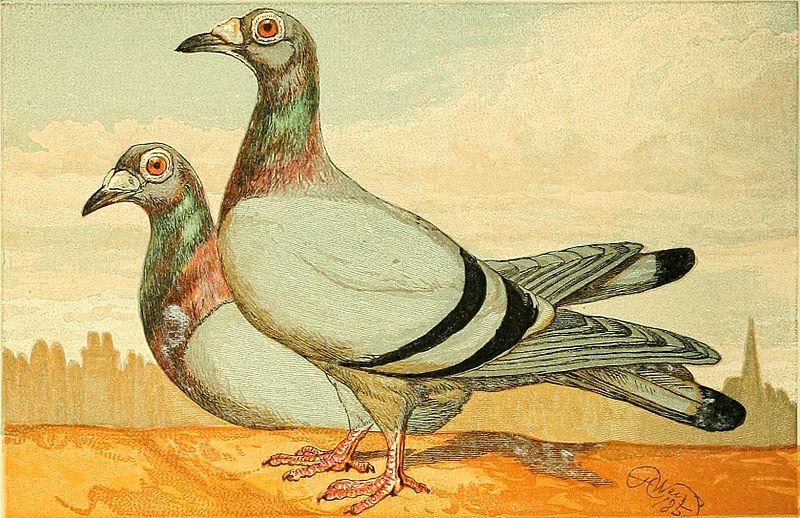
In my own life, I spent many hours watching them—sensing a connection from their dark eyes surrounded by an orange eye-ring; watching how they bobbed their heads to walk around; how they cooed and rubbed their beaks together in courting. One has only to look to see a beautiful bird, so tame that it would eat from your hand. Often I would look at them, and remember a story my mother told me about her childhood in Mexico, about having to raise them for food because she was so poor. And in those moments, I feel gratitude for these gentle birds with their iridescent wings—these creatures, capable of flight, that could easily fly away, but that choose to remain with us in our cities.

—GSO
On The Symbolism Of The Cicada: The Poet and the Song (Short #1)

Everything we perceive serves to construct the language with which we understand the world…

We exist in a world of symbols, as Aldous Huxley expressed in his essay, “The Doors of Perception.” Everything we perceive serves to construct the language with which we understand the world: a language built on associations and representations to build meaning. The cicada has existed longer than we, as human beings, have stood upright. The earliest fossils we have of the cicada are from the Jurassic period, and the oldest instances of their symbolism in cultural artifacts are from the Shang Dynasty, and from the time of Homer’s Iliad in the 12th century BCE. Often they are symbols of rejuvenation and immortality. Their distinctive song, heard in the summertimes, associates them with music, and as the personification of the poet, because it represents an insect that sings all its life until it dies. 

—GSO

Dreamcicadas: Introduction

An introduction aimed at summarizing the creative concept behind Dreamcicadas.

Hello! My name is Gabriel. I’m a writer and musician based in Toronto, Canada. I write about arts, music, literature, and about a variety of subjects and ideas.

I’ve been a student of the humanities (specifically: arts, music, and literature) for the past ten years now— first at the University of Ottawa (B.A. general), then at The Glenn Gould School of The Royal Conservatory of Music (PDP in voice), and finally at The University of Toronto (HBA English & Philosophy).

My goal is to share all the different aspects of art and culture that I’ve absorbed in my years of study and as a professional musician.

Why Dreamcicadas?

  1. The name Dreamcicadas comes from Borges’ seminal 20th century book El Hacedor (literally: The Maker), often titled as Dreamtigers in English.
  2. The fact that cicadas spend most of their lifetime underground—up to seventeen years in the case of the periodical cicadas—represented for me the long and unconscious prelude of artistic creation.
  3. Dreams represent the unconscious creative world, longing to be brought forth in the creative act— in this case, through writing.

It is my hope that this blog on arts & culture will culminate into a series of books and magazines.

Here are some general subjects to expect for future posts:

  • Literature (fiction, poetry, philosophy, psychology, comedy etc.)
  • Music (world music, western classical, popular music of all genres)
  • Symbolism (in all forms of art)
  • Shorts: Bios, Essays, Literary Sketches
  • Poetry in translation (my own translations)
  • Essays on ideas and artworks
  • Short stories and poems (my own works)

Please follow my IG page for daily posts and updates: @dreamcicadas